The information provided on this site is for educational purposes only and does not substitute for professional medical or psychological advice. Consult a medical professional or healthcare provider for advice, diagnoses, or treatment. Claire Evers is not liable for risks or issues associated with using or acting upon the information on this site.
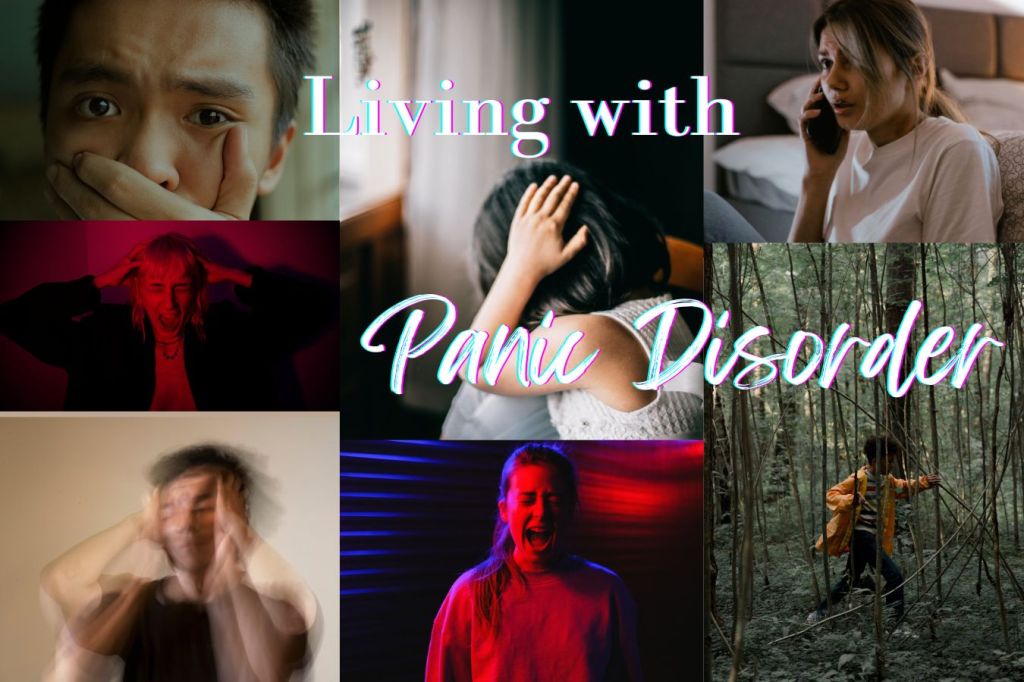
Due to the number of emergency room visits a person with Panic Disorder usually makes, this is considered to be one of the most costly and debilitating forms of Anxiety. Seeking and continuing a relationship with the appropriate health care professionals is recommended for not only achieving remission, but ensuring a higher quality of physical health moving forward.
Panic Disorder DSM-5
According to the latest version of the Diagnostic and Statistics Manual of Mental Disorders (DSM-5) Panic Disorder is the presence of at least one panic attack followed by at least a month of significant distress that another panic attack will occur, and the avoidance of all potential triggers to the point of avoidance of regular school or work obligations.
The symptoms of a Panic Disorder also cannot be solely explained by the use of any type of drugs, medications, or any underlying physical or mental health conditions.
The panic attacks must be unprovoked (without the presence of a real threat) or be unexpected and tend to peak within minutes.
Panic Disorder Symptoms
Panic Disorder is different from other types of mental disorders as most of the symptoms of this condition tend to present as physical symptoms (panic attacks) instead of cognitive ones. These attacks may be extremely frequent, or you may only experience a few of these per year if you have Panic Disorder. Four or more of the following symptoms are necessary for the diagnosis of a panic attack.
- Palpitations
- Pounding heart or accelerated heart rate
- Trembling
- Shaking
- Sweating
- Feeling short of breath or like you’re being smothered
- Feeling like you’re choking
- Chest pain
- Nausea
- Abdominal distress
- Dizziness
- Feeling Unsteady
- Light-headedness
- Feeling like you might faint or you do faint
- Either chills or heat
- Numb or tingling sensations
- Derealization- feeling like things happening aren’t real
- Depersonalization- feeling detached from yourself
- Fear of losing control
- Fear of ‘going crazy’
- Fear of dying
Again, the panic attacks must not have a clearly identifiable trigger, and be unexpected. Drug usage, medication and other underlying conditions may contribute to a panic attack, but cannot be the sole reason for a person’s Panic Disorder.
There are several health conditions that mimic the symptoms of Panic Disorder and should be assessed by a medical professional to rule out while determining your diagnosis.
- Substance Use Disorder
- Pulmonary Embolism
- Congestive Heart Failure
- Mitral Valve Prolapse
- Angina
- Asthma
- Other Anxiety Disorders with panic attacks
Etiology of Panic Disorder
The etiology, or cause, of Panic Disorder is still being researched, however there are several contributing factors that could lead to or predict a potential diagnosis of Panic Disorder.
- Chemical Imbalance
- Serotonin, Cortisol and Gamma-Aminobutyric Acid (GABA)
- Abnormalities between the three can lead to recurrent panic attacks
- ‘Adverse’ childhood issues
- Childhood conditions can lead to a diagnosis of Panic Disorder as an adult
- Neural hyperexcitivity
- Certain areas of the brain are more sensitive to stimuli and tend to react outside normal levels
- The amygdala has been considered to be a main portion of the brain involved with panic and the processing of it
- Genetics
- If you have a relative with Panic Disorder, your chances of developing it go up by 40%
- European Americans are more likely to develop a Panic Disorder over African Americans, Asian Americans or Latinos
- Women are more likely than men to develop Panic Disorder
Panic Disorder and _______?
People with Panic Disorder also tend to be diagnosed with other mental disorders and are at a greater risk for developing major physical health problems. For this reason, it is good to seek both medical and psychological evaluation if you think you qualify for a Panic Disorder diagnosis to better understand what challenges you are facing, and learn which treatment plan is best for you.
Mental Health Comorbidities
Agoraphobia is an extremely common form of Anxiety diagnosed alongside Panic Disorder as an individual with Panic Disorder will usually avoid triggers in a way that is similar to that in a person with Agoraphobia. Almost one fourth of those diagnosed with Panic Disorder are also diagnosed with Agoraphobia.
OCD is another mental disorder commonly diagnosed alongside a Panic Disorder. Because Panic Disorder episodes are unpredictable, obsessions over any potential triggering situations can also develop, and compulsive behaviors may be used as coping mechanisms to help ‘prevent’ any future panic attacks.
Social Anxiety is another Anxiety disorder associated with a Panic Disorder diagnosis. There can be a lot of avoidant behavior in a person suffering from Panic Disorder and panic attacks. As a result of this, a person may avoid social situations for fear that their struggles may become a source of public embarrassment, and eventually lead to a diagnosis of Social Phobia.
Physical Health Comorbidities
Panic Disorder is noted for its’ presence of physical side effects associated with panic attacks. However, there is a higher risk of patients developing other physical health problems alongside their Panic Disorder diagnosis. An untreated patient is more likely to experience the following physical issues and to be at greater risk for an early death because of these health issues.
- Asthma
- COPD
- Irritable Bowel Syndrome
- Hypertension
- Mitral Valve Prolapse
- Low birth weight of babies in pregnant women with Panic Disorder
Panic Disorder Treatment
Panic Disorder Therapy
Cognitive Behavioral Therapy (CBT) is a main form of therapy for Panic Disorder. It can help to create neural pathways to encourage well-being and help reduce fear of panic attacks. Studies have shown that pursuing face-to-face therapy is not only more effective than online therapy, but will likely keep you from dropping out of treatment too soon.
Breathing Techniques are usually used to help you ground yourself in the middle of a panic attack so as to limit the (perceived) severity of your symptoms. These techniques will not get rid of your Panic Disorder and should be used alongside in-person CBT and with appropriate medications.
Interoceptive Exposure has shown to be the most effective form of exposure therapy for Panic Disorder. With this type of therapy you recreate the physical symptoms you experience while having a panic attack to reduce your anxiety over the physical aspects of your condition. Knowledge of your medical needs and limits is needed before you begin this type of therapy. These exercises can be uncomfortable but should also not be painful. Examples of exercises are:
- For dizziness: spin on a chair
- For shortness of breath: breathe quickly through a straw
- For hyperventilation: over-inhale and over-exhale
- For increased heart rate: run in place.
Pharmacotherapy, or medication, is a part of the package that will allow a person struggling with Panic Disorder to manage their overall sense of well-being (SSRIs or antidepressants) or diminish the effects of an acute attack (benzodiazepines). Other medications may be prescribed if you have concurrent physical or mental health issues that require medication as well.
In CONCLUSION: combining the four listed techniques from above has been shown to be the most effective form of treatment for panic disorder.
Living with Panic Disorder
Not everyone responds the same to treatment, but one of the most agreed upon facts about treating Panic Disorder is to continue seeking professional help as relapses are especially common with Panic Disorder. Building a strong working relationship with your healthcare provider during an acute episode is crucial, and maintaining that relationship during remission can help to decrease your symptoms or lifetime prevalence, which is especially necessary as Panic Disorder, alongside Social Anxiety and GAD, are some of the harder forms of anxiety to achieve lifelong remission with.
Other factors besides discontinuing treatment that may affect your ability to achieve remission are:
- the presence of chronic illness
- high interpersonal sensitivity
- being single or unmarried
- being from a low social class
- living alone
Isolation, smoking and thoughts of suicide are higher in individuals with Panic Disorder. If you think you may be suffering from Panic Disorder, be sure to pursue clinical help and share your struggles with trusted family member, friend or partner. Having people around you will increase your resilience and improve your quality of life.
Things to avoid with Panic Disorder
Continuing treatment is at the top of the list for achieving remission if you have Panic Disorder, but there are also some things to avoid to lessen your symptoms.
Alcohol and Caffeine can trigger adverse chemical reactions in your brain and/or make you more sensitive to unknown triggers. If you can avoid these substances, it will increase your ability to deal with your symptoms and lessen your chances of overstimulation and keep your stress-response levels within check.
Excessive Stress is also not helpful to you if you have Panic Disorder. We all encounter normal amounts of stress, but if you’re struggling with any form of Anxiety or Panic Disorder, Stress Reducing Activities will increase your quality of life.
Panic Disorder is often associated with Isolation, which will only make your journey all the more difficult. Reaching out to friends and family is crucial to maintaining your mental health. Going it alone will only make things all that much more difficult. Don’t be afraid to share the load.
Recreational Drugs can also alter brain chemistry and the perception of threats and should be avoided completely if you suffer from Panic Disorder.
How to help someone with Panic Attacks
Don’t give up on them. Even if they’re isolating and begging to be left alone. Panic Disorder is associated with an incredibly low quality of life and a high degree of suicide, not to mention that few people diagnosed with Panic Disorder fully achieve remission, meaning that this is likely going to be a lifelong struggle.
Help them understand and review their options for treatment. Patient education and involvement is crucial. Treatments are still being researched as a lot of patients tend to drop out of treatment because they don’t see results soon enough. If your loved one is pursuing pharmacotherapy, you may need to remind them that it will take 12 weeks for anti-depressant medications (SSRIs) to reach a measurable level of efficacy and that experimentation is a part of the process for any form of therapy. And not all types of therapy will be comfortable for them. If you can help to keep them motivated and educated, their chances at conquering Panic Disorder just went up.
Remind them to practice stress management, not avoidance. They may need to limit their exposure during an acute episode of Panic Disorder, but if your LO can get regular stimulation then their resilience to triggers will increase over time. It may be helpful for them to practice regular self care and pursue stress reducing activities.
Keep in mind that relapses are common. Roughly 60% of patients manage to achieve remission within six months or less, and 20% still struggle with debilitating levels of symptoms even with treatment. That said, 80% of people who pursue CBT for Panic Disorder notice an improvement, but can still struggle with relapses, with remissions lasting up to six months at a time.
Conclusion
Panic Disorder is a debilitating form of Anxiety and should be taken seriously. Pursuing regular treatment, avoiding unhelpful substances and maintaining relationships with loved ones are crucial to a positive future. If you think you may be suffering with Panic Disorder, don’t hesitate to ask for help and keep in mind that even with proper treatment, you may still experience relapses over the course of your lifetime. Don’t let this get you down. We all have seasons of hope and seasons of struggle. Surround yourself with people who are trusted and qualified to help you through your struggles.
May God Bless and Keep You.
Related Posts


Now available to read for free on Kindle Unlimited!!!

Coming Soon!

 Claire Evers
Leave a comment